Friday, July 1, 2022

Spider Victim with Random Twitching Movement

I wanted to show off a twitching victim I made for a friend's spider themed haunt. Here's a video of the prop in action.


The mechanism is based on an automatic car door lock motor like this:


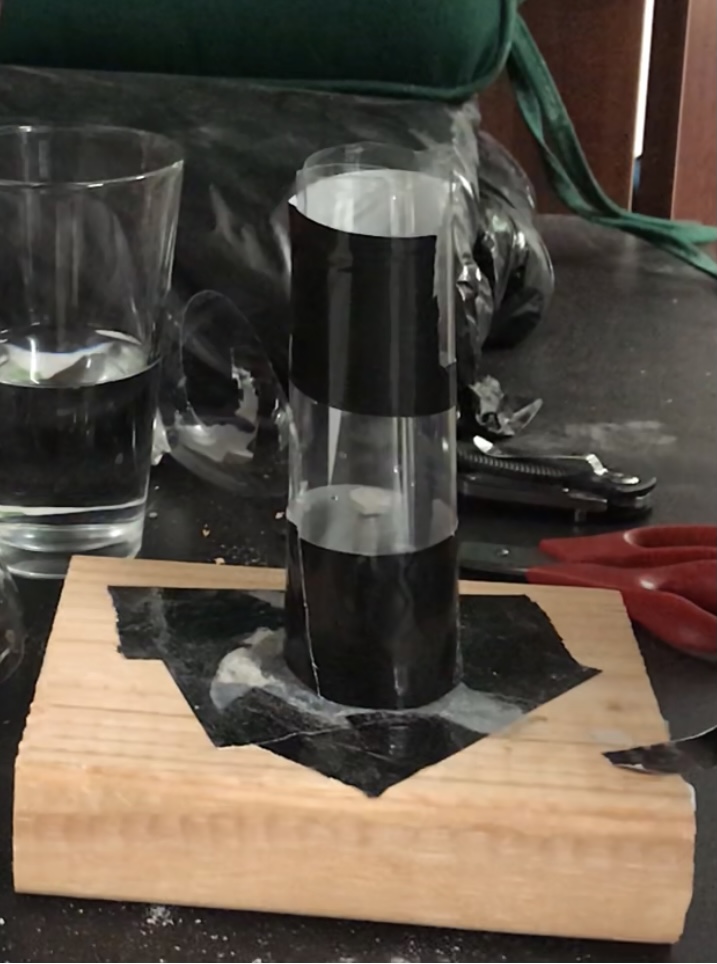
It's available on Amazon for about $6 and runs on 12v DC. Here are a couple close up pictures of the mechanics. 


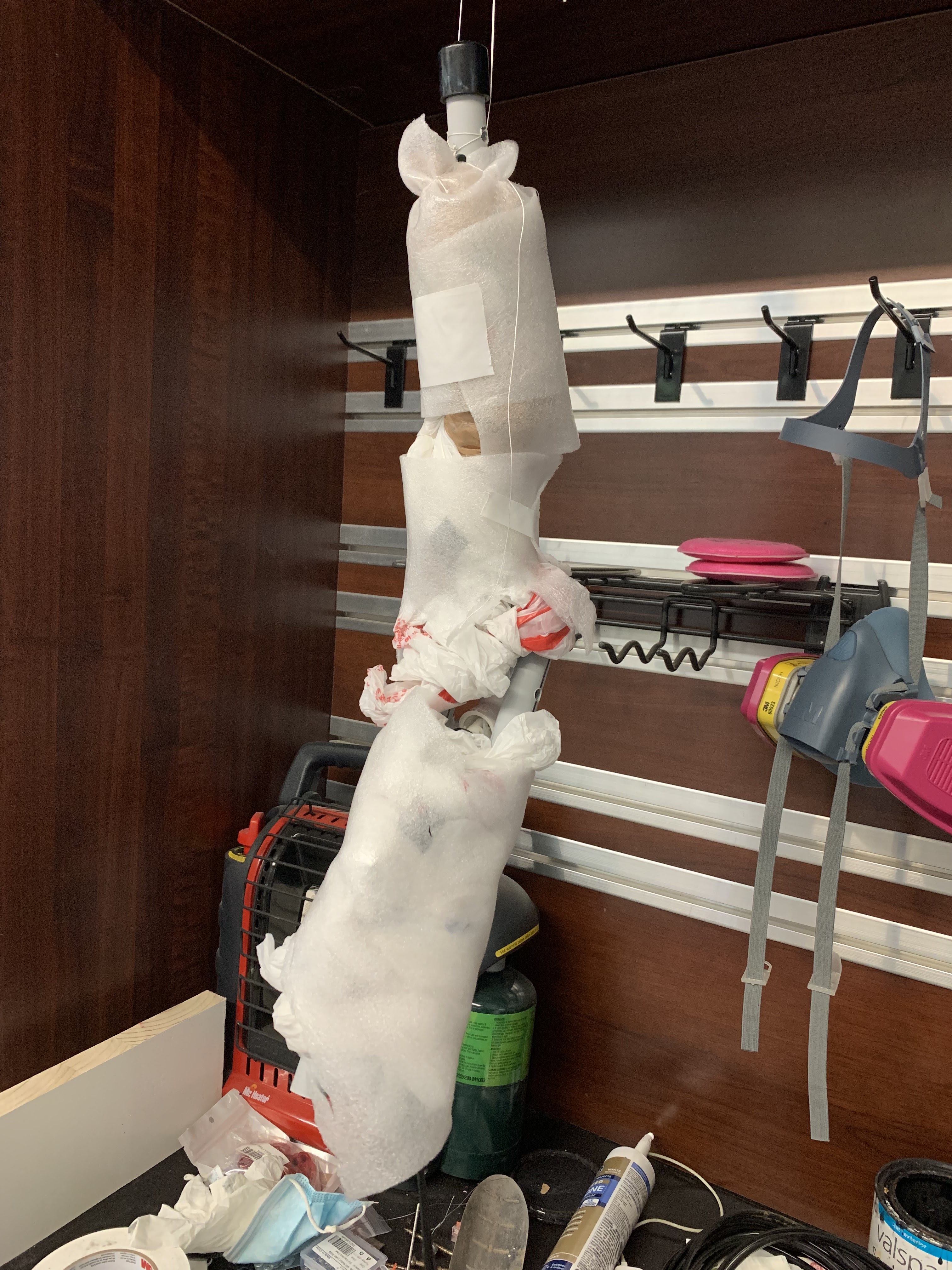
The PVC and motor were then covered with plastic bags for bulk and then a couple layers of plastic treated with a heat gun to give the right corpsed/spun web appearance. 


This electronics for this project are an extension of a lighting simulator I made previously. For this project, the frequency of the random twitches are controlled by the potentiometer. The arduino sends 5 volt signals to the mosfet which in turn controls the 12 volt motor. 


To keep things small and cheap, I built the circuit based around an ATTINY85. These processors are great because they are very cheap (usually <$2) and programmable using the Arduino IDE. Here's a picture of the board. 


Alternatively this could be built with an arduino uno and mosfet as a simple first arduino project.


Here's the schematic for the circuit:


And here's the code: [code updated 8/29/22 to account for millis() rollover] 


//  Jekyll-Labs Twitchy Att
iny85
//  Built for Randflash board v1.1
// 
int fet = 0;
int pulses = 1;
int pot = A1;
unsigned long start = 0;

void setup() {
  // initialize digital pin LED_BUILTIN as an output.
  pinMode(fet, OUTPUT);
  randomSeed(A0);
}

// the loop function runs over and over again forever
void loop() {
  int potsens = analogRead(pot);
  if (potsens < 120) potsens = 0;
  unsigned long delaybonus = map(potsens,0,1023,0,600000);

  if ((millis() - start)>(3000 + delaybonus)){
    start = millis();
    pulses = random(3)+1;
    for (int i = 0; i < pulses; i++) {
      digitalWrite(fet, HIGH);   // turn the LED on (HIGH is the voltage level)
      delay(150);                       // wait for a second
      digitalWrite(fet, LOW);    // turn the LED off by making the voltage LOW
      delay(600);                       // wait for a second
    }
  }
  else {
    digitalWrite(fet,LOW);
  }
  delay(10);
}

Wednesday, June 22, 2022

Lightning Simulator

I decided to start playing with the Attiny85 processors because they are small, cute, and cheap. I love the arduino nano, but even the knockoff clones shipped from China are costing more than $5. I decided a great first project would be the lightning simulator. Here's a video of the final project:


Here is the Fritzing layout: (with 12v's worth of AA batteries and a single LED for the 12v light)


and the schematic:


After making it on a breadboard, I had a PCB printed to make the process more compact:


The code is Rob Tillaart's lightning code. Simple and effective.
// 
//    FILE: lightning.pde 
//  AUTHOR: Rob Tillaart 
//    DATE: 2012-05-08 
// 
// PUPROSE: simulate lighning POC 
// 
// 
#define BETWEEN 2579 
#define DURATION 43  
#define TIMES 7 
#define LEDPIN 0 
unsigned long lastTime = 0; 
int waitTime = 0; 
 
void setup() 
{ 
  randomSeed(analogRead(2));
  pinMode(LEDPIN, OUTPUT);  
} 
  
void loop() 
{ 
  if (millis() - waitTime > lastTime)  // time for a new flash 
  { 
    // adjust timing params 
    lastTime += waitTime; 
    waitTime = random(BETWEEN); 
  
    for (int i=0; i< random(TIMES); i++) 
    { 
      digitalWrite(LEDPIN, HIGH); 
      delay(20 + random(DURATION)); 
      digitalWrite(LEDPIN, LOW); 
      delay(10); 
    } 
  } 
   
  // do other stuff here 


} 

Monday, September 27, 2021

Electrical Connections — WAGO 221

Updated - New Post


I wanted to share a new method I’m using for making electrical connections in my yard holiday setup. I’ve been looking for something safe, waterproof and ideally modifiable/reusable for when I change my mind/layout.

I’m sure that others have discovered these previously, but I am loving the WAGO 221 lever nuts. Works for AWG 12-24, rated for mains mower amps/volts. Apparently more common in Europe for household wiring, but also certified by UL for household wiring in the US. I’m only using them for 12V 5A DC circuits, but it’s nice to know they’ve been well tested.

I’m using 18g landscaping “lamp” wire and 35mm film canisters for my junction boxes. Here are a few pictures of my set up. 

*I have no financial connection with any of this. Just sharing something that works well for me. 
** I’ve also tried a similar product that I found on Ali-express. It is much cheaper. But also much lower quality. Perfectly fine for throwing something together, but the wires fit in less well. I’d also never use it with mains power.


Monday, May 31, 2021

PVC Shop Vac Adapter

So, it would be lovely if shop vac hoses came in a size that mated well with PVC pipe. Alas, this just isn't so. 

 There are basically three options:

1) Proprietary adapter

        Expensive, not available, still may not work well.

2) Use a flexible coupler outside both pipe and hose

        Works, but looks a little unfinished

3) Make an adapter yourself

        Use a hot air gun and concrete mold


Here's a not so quick video of the process.


1) anchor bolt to scrap wood


2) Make a cone shaped mold out of a PET soda bottle and some tape. 


3) put mold on top of bolt and fill mold with concrete.


4) wait for concrete to harden completely (several days)

5) remove plastic mold. 

6) Use heat gun to soften PVC


7) stretch PVC over concrete mold and allow to cool. 


Color PVC

PVC is a great material. It's lightweight, relatively cheap, and easily obtainable at your nearest box store. One of the main problems with PVC, though is the color. Most of the big box stores will only cary plumbing PVC in white and electrical conduit PVC in grey. Other colors of "structural" PVC can be ordered, but it's expensive and hard to find. You can also try and paint PVC, but it is messy, and often flakes off. 

The best solution that I have seen is the technique of "staining" PVC that I first saw here in MAKE magazine.

The technique is pretty simple and basically similar to the purple primer we use prior to joining fittings for plumbing PVC. It turns out, Oatey PVC Clear Cleaner can be stained a variety of nice colors with petroleum dyes.


These petroleum dyes are commonly used to add color to kerosine for lamps, and for coloring gasoline in industrial applications. The quickest way to get your hands on some is searching ebay for petroleum dye or Rekhaoil dye. I purchase mine from this retailer. One ounce goes a long way (20-30 ounces of Clear Cleaner.)

Add a small amount of dye to the can and test on a scrap piece of PVC. Once you are happy with the color, use the can's applicator or a sponge paint brush to apply to PVC. Remember these products should only be used in a well ventilated place (outdoors). I also use double nitrile gloves or thick dishwashing gloves as this will be absorbed through your skin and stain your hands a lovely color. 


Solder Station Fumes Extractor


Soldering is great, but the fumes, less so. The link between solder fumes and asthma is clear. More fumes, more asthma. Breathing (and eating) lead is also not recommended. The newer lead-free solder compounds may be safer in some ways, but also contain other likely harmful substances that we are better off without. 

Soldering can produce smoke with particulate matter, volatile organics, and other noxious gases. A good system should both filter out the particulate matter, and then exhaust the remainder to the outside. 

This system uses a shop vac with hepa filter to provide local suction and manage particulate matter. Exhaust from the shop vac is then fed into an exhaust fan that is ducted to the outside.


Here's a video of the system in operation:


The core of the system is a good exhaust fan. This fan handles my solder exhaust, but can also improve the ventilation of my work room in general. If you are trying to exhaust the entire room, you should probably calculate the "air changes per hour". A good number for ventilation is 8-20 air changes per hour. You can do the math, but for 8 air changes per hour a good rule of thumb is 1 CFM per square foot. At a minimum, the CFM for the exhaust fan needs to be higher than the CFM for the shop vac.


I use this one Vivosun Exhaust Fan. It seems to be used primarily by indoor marijuana cultivators so can move lots of air, relatively quietly. 

I use a combination of PVC pipe and metal ductwork for the exhaust unit. This let me create a well sealed hole through the wall as well as using a cleanout fitting to completely seal the exhaust vent when not in use.


The particulate matter filtration and suction boost is handled by a shop vac with HEPA filter. I use this 4.25 HP Rigid Shop Vac from Home Depot, but you can use whichever one you already have. It's a bit noisy, but works well. The main suction hose attaches to the PVC suction arm. A second hose from the shop vac exhaust rests inside the intake vent for the exhaust fan. 

The desktop suction arm is made from PVC. In order to attach the shop vac hose to the PVC, I had to dilate the last pipe a bit. I used the same technique for adapting my shop vac to serve as a dust collector for my miter saw. 

I created a cone shaped mold out of cement to dilate the PVC pipe. Here's a link with a video to show the process.

Finally, I stained the PVC black to match the decor of my work shop. 


Saturday, October 31, 2020

Mr. Funnybones


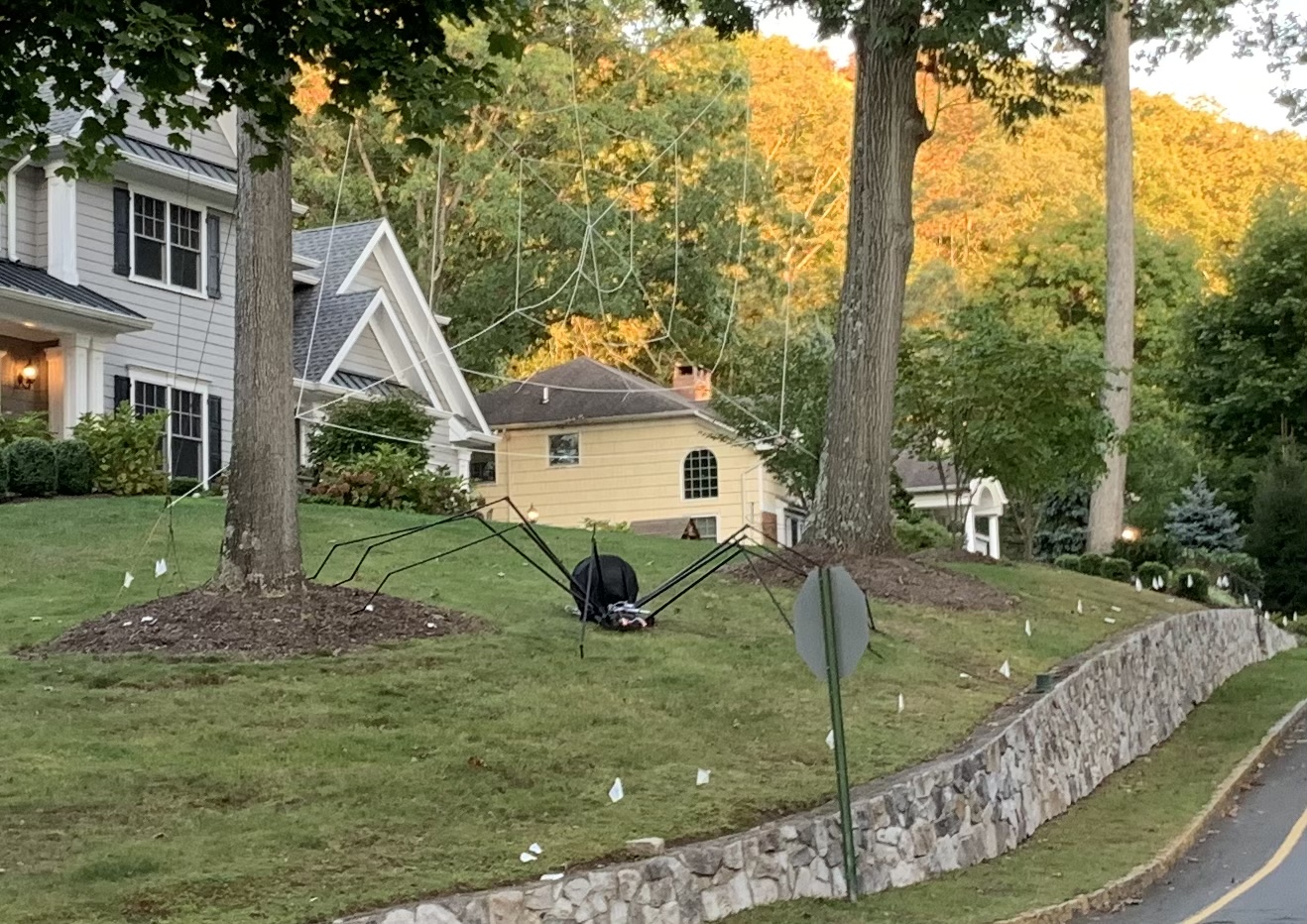
The Spider (Halloween 2020)


 This is a Halloween prop from 2020. When the motion sensor is triggered, it moves its front legs and makes "spider noises" (some of which are actual recordings of wolf spiders.)

Here are some more still images.


The electronics for the spider run off an Arduino. (Plus Adafruit AudioFX board, a motion sensor, and a few relays). 


Thursday, October 31, 2019

I see you - Halloween 2019


This prop was a lot of fun. A combination of motion sensors, some LEDs and a servo motor let the skull light up and look towards movement. If you walk past, its head will continue to swivel and follow you. I had five of these stationed along our front walk.